You are here: Main











Fluke 754
Documenting Process Calibrator ... does the work of many tools

Useful features:
- Handles fast pulsed RTD transmitters and PLCs, with pulses as short as 1 ms
- Measures/sources pressure using any of 29 Fluke 700Pxx Pressure Modules
- Creates and runs automated as-found/as-left procedures to satisfy quality programs or regulations, and records and documents results
- Holds up to a full week of downloaded procedures and calibration results
- Uses many features like autostep, custom units, user-entered values during test, one-point and two-point switch testing, square root DP flow testing, programmable measurement delay and more
- Provides easy-to-use multi-lingual interface
- Features a bright white dual display for reading both sourced and measured parameters simultaneously
- Includes rechargeable Li-Ion battery for 10 hour uninterrupted use
- Comes with three-year warranty and DPC/Track Sample software
- Offers compatibility with many asset management software packages
Whether you're calibrating instruments, troubleshooting a problem, or running routine maintenance, the Fluke 754 with HART® communication can help you get the job done faster. It does so many different tasks, so quickly and so well, it's the only process calibrator you need to carry. This rugged, reliable integrated communicating calibrator is ideal for calibrating, maintaining, and troubleshooting HART and other instrumentation.
The 754 is a power multifunction documenting calibrator that you can use to download procedures, lists, and instructions created with software; or upload data for printing, archiving, and analysis. The powerful built-in HART interface is capable of performing nearly all the day-to-day tasks you now perform with a separate communicator.
In fact, the 754 does the work of several tools. It sources, simulates and measures pressure, temperature, and electrical signals with one rugged, hand-held device. For documentation, the 754 automates calibration procedures and captures your data. And, of course, it helps you meet rigorous standards like ISO 9000, FDA, EPA and OSHA regulations. Plus, the new improved graphical screen, Li-Ion battery for longer life, USB port, and accessories help you work smarter and faster.
FREJA and SMRT Digital Twin
High fidelity simulator

- Test before you install to reduce stress during time constraints
- Enables virtual relay testing
- Created test plans that can be reused for real-world testing
- Useful training tool, enhancing clarity and reducing human error
- All safety-related risks are negated using a digital twin relay test set
The FREJA and SMRT Digital Twin is the first of it’s type to be created and is a functional digital twin of Megger's relay test systems, FREJA and SMRT. This pioneering technology enables you to virtually test Siemens SIPROTEC 5 devices through Siemens’ cloud-based SIPROTEC DigitalTwin. The relay tests are performed online, before the physical devices are accessible, and with tested and approved protection settings, only a subset of the tests need to be repeated on the physical devices to ensure correct input and output hardware and connections.
Merytronic PI-3
De-energized three-phase identifier

- Identify any De-energized cable
- Single-phase and multi-phase cables
- Signal injection:
Direct connection
Induced with induction clamp
- Max. cable length > 50 km (*)
- Rechargeable battery in the transmitter. Operation time > 12h
- Identification sound alert
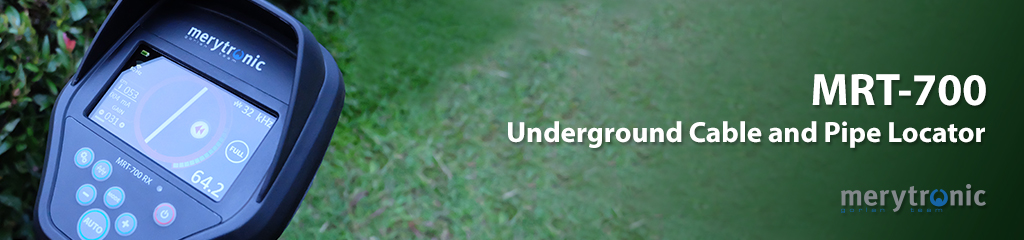
Merytronic PI-3 MV & LV cable identifier is a robust, user-friendly, and advanced digital tool. It helps users easily identify any de-energized electric cable and its phases, among multiple conductors, in substations, trenches, manholes, panels, aerial/underground conversions, etc
The transmitter includes three inductive clamps (or crocodiles). Therefore, it can detect each one of the phases of a feeder without changing the transmitter connection. It also helps to identify both de-energized cables prior to being cut and open cables (once they have already been cut) to join the phases of both sides correctly
SPG5-1000-1
Portable stand-alone cable fault location unit for LV cable installations

- Toolbox philosophy: Identification, prelocation, pinpointing and conversion of faults all in one unit
- Safety interlocks for monitoring of station earth and touch potentials (F-U), as well as earth connections (F-Ohm)
- Fully automatic operation of all modes via motorised switching
- Software-based user interface with single “turn & click” rotary knob control
- ICEplus transient prelocation method for normal unbranched LV cables as well as for branched LV networks
- DC test (DC hi-pot) and burning up to 5 kV, surging (thumping) up to 4 kV, delivers 1000 J
The SPG5-1000-1 is a comprehensive all-in-one-box fault locating solution, tailored for testing, identifying, converting, prelocating, and pinpointing faults in low-voltage cable installations. It effectively handles a wide variety of cable faults: from flashing and non-flashing to high and low resistance, intermittent, main insulation, and sheath faults.
Prioritising user convenience, the SPG5-1000-1 is fully automated and features an intuitive software interface, eliminating most user interventions known from manual analogue instruments. The controller actuates motorised switches so that the unit auto-adjusts to the correct settings based on user input. Simplifying the operation further, a single “turn and click” rotary knob ensures easy accessibility for users of all experience levels.
Utilising the integrated ICEplus method for HV prelocation, the SPG5-1000-1 accurately and precisely locates faults in both unbranched point-to-point low-voltage cables and branched low-voltage networks with T- or Y-joints. ICEplus is a transient prelocation method that evaluates the oscillating current component of a propagating travelling wave which was previously created by capacitor discharge into the cable. Notably, unlike TDR and ARM, this method is unaffected by common issues of attenuation and reflections at T- or Y-junctions, ensuring consistent prelocation regardless of the network’s configuration.
Toolbox philosophy: Identification, prelocation, pinpointing and conversion of faults all in one unit
Safety interlocks for monitoring of station earth and touch potentials (F-U), as well as earth connections (F-Ohm)
Fully automatic operation of all modes via motorised switching
Software-based user interface with single “turn & click” rotary knob control
ICEplus transient prelocation method for normal unbranched LV cables as well as for branched LV networks
DC test (DC hi-pot) and burning up to 5 kV, surging (thumping) up to 4 kV, delivers 1000 J
MS5000
Smart Grid medium voltage sensors for overhead line networks (4 to140 kV)

The MS5000 (Metrysense5000) Smart Grid medium voltage sensor for overhead line networks (4 to 140 kV) provides real-time grid information, giving you unprecedented visibility of your distribution grids through the accurate identification of high impedance faults and predictive analytics for deteriorating network components. It has been designed for FLISR (fault location, isolation, and service restoration), grid analytics, power quality, and flow monitoring.
- Reliable online detection of all types of faults
- Reduces the average interruption duration (SAIDI)
- Reducing number of faults by identifying weak spots (SAIFI)
- Powerful cyber security capabilities
- Unique proprietary algorithms to detect high impedance faults with high accuracy
- Power harvesting for line currents as low as 1.5 A
- Radio communication for rural areas with no cellular coverage
- Operates with earthing systems including solid-grounded, floating neutral, SWER, and Petersen coil
- Connection to existing DMS systems
- Provides on-line grid visibility of currents, power flow etc.
- Reduces wildfire risk, increases safety
- Fast and easy installation
AIAcompact
PD Detector

The AIAcompact is a portable instrument for in-service acoustic and electric (UHF) partial discharge measurements on high voltage assets such as:
- Gas-insulated switchgears (GIS)
- Gas-insulated lines (GIL)
- Power transformers
- Distribution transformers
- Cable accessories
To be suitable for all these applications, the instrument adapts to a variety of piezoelectric acoustic sensors and pre- processing units. It can be used with acoustic sensors and external ultra high frequency sensors as well as embedded UHF sensors of the tested asset.
Because of its built-in battery and its standalone capability the AIAcompact can even be used for on-site testing in environments where no mains supply is available.
For a convenient remote control of the device, the USB interface allow the connection to a PC or laptop with the optional AIAcompact software installed.
Every AIAcompact comes with a built-in four-channel multiplexer, which allows switching between four input channels. Buttons at the panel of the instrument enable you to directly select one of the four signal sources. As a result, the partial discharge signal and the voltage signal are split and can be selected separately. All settings, e.g., input and display mode, are stored individually for each channel.
Megger Transformer Test Van
Test van for maintenance and diagnostics of power transformers

The Megger transformer test van is a vehicle equipped with a number of instruments for on-site condition assessment of power transformers. The biggest advantage of the van solution compared to separate or multi-functional instruments is its instantaneous readiness to test, quick proceeding to results and clean up at end of testing. All leads are on drums, preconnected to instruments, through automatic switching no need to climb several times. This results in increased productivity, safety and user comfort, considering an air-conditioned office like work environment.
- Routine and advanced diagnostic tests
- Centralized control and reporting
- Two sets of cables (HV&LV) are shared among different instruments
- Automated test circuit arrangement and switching process
- Safe operation and user guidance through the tests
- Easy extraction of mounted instruments for standalone use
Page 23 of 38
 |
 |
 |
 |
 |
 |
2026 Electrical Testing Expert Catalog

Megger Transformer Catalogue

Megger Cable Catalogue

Industrial Maintenance Solution

Megger Power Catalog

Merytronic
Portable Devices

Fluke 2025 - 2026 Product Guide

Solucao Product Catalog

Orion Electrical Safety Rubber Equipments Catalogs

ANHU Electric Catalog

BETE Electrical Construction Tools 2025

MULTI Main Sales Product Line 2026
